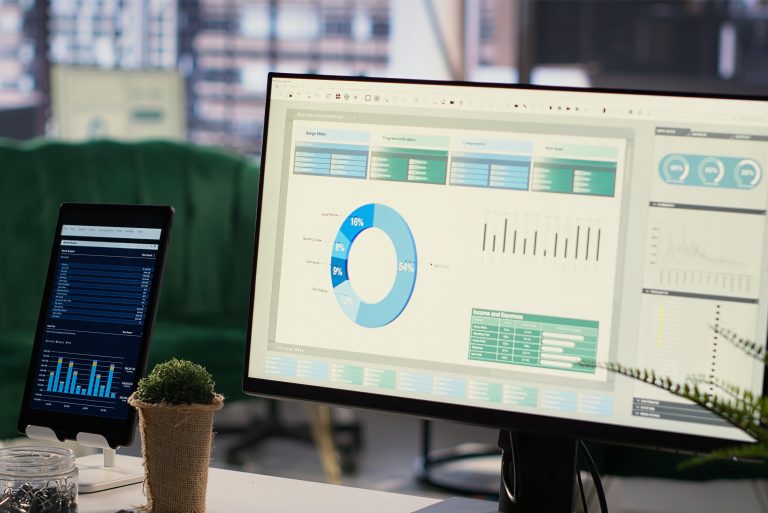
AI Forecasting & Decision Intelligence System
AI Forecasting & Decision Intelligence System
Plan with more confidence using VTech’s AI Forecasting & Decision Intelligence System in Malaysia. By combining historical data, operational trends, and business rules, the system helps organizations forecast demand, identify patterns, support planning decisions, and respond faster to changing business conditions.
Why Choose Our AI Forecasting & Decision Intelligence System in Malaysia?
Many businesses can see what already happened. Fewer can reliably anticipate what is likely to happen next. Sales may fluctuate without clear warning. Stock levels may not match future demand. Resource planning may depend too much on guesswork, spreadsheets, or manual assumptions. Our AI Forecasting & Decision Intelligence System is designed to help businesses move beyond backward-looking reporting. It gives organizations a more structured way to analyze historical patterns, project future trends, and support planning decisions with better data intelligence.From Raw Data to Practical Forecasts
Business forecasting becomes difficult when data is scattered across systems or when teams rely on static reports that do not explain what the numbers may lead to. A forecasting and decision intelligence platform helps organize data from across the business and turn it into more actionable insight. This can help businesses forecast likely outcomes, compare trends, identify exceptions, and support decision-making in areas where timing, demand, cost, stock, or resource allocation matter.Support Planning Across Different Business Functions
Forecasting is not limited to one department. Different teams may need different views of the future depending on the decisions they make. Our AI Forecasting & Decision Intelligence System can support use cases such as:- Demand forecasting
- Sales trend forecasting
- Inventory and replenishment planning
- Purchasing and supply planning
- Operational workload forecasting
- Branch or location performance forecasting
- Financial trend analysis
- Exception and decision support reporting
Reduce Guesswork in Daily Operations
Without a reliable forecasting process, businesses often react too late. Teams may overstock, under-plan, miss demand shifts, or rely on assumptions that are difficult to verify. Decision intelligence helps reduce that uncertainty by providing a more informed view of likely patterns and possible outcomes. This does not replace human judgment. Instead, it gives teams a better basis for making decisions, especially when timing, volume, and trend visibility are important.Turn Historical Data Into Forward-Looking Insight
Many organizations already collect useful data through ERP systems, accounting software, POS platforms, inventory systems, CRM tools, spreadsheets, and internal applications. The challenge is not always the lack of data. The challenge is how to use it meaningfully. Our solution helps businesses transform existing data into more useful forecasting and planning insight. By identifying patterns and building more connected decision views, teams can work with stronger context instead of relying only on past summaries.Built for Businesses That Need Faster, Smarter Planning
As operations grow, planning becomes harder. More SKUs, more branches, more transactions, and more market movement create more pressure on forecasting accuracy. Businesses need a way to see emerging trends earlier and respond with more control. This is where an AI Forecasting & Decision Intelligence System becomes especially valuable. It helps businesses improve planning visibility, reduce reaction time, and support smarter decisions across departments.Suitable for Different Industries
- Retail and distribution
- Warehousing and logistics
- Manufacturing and production
- Finance and administration
- Service and support operations
- Multi-branch businesses
- Inventory-driven businesses
- Organizations with data spread across multiple systems
What Businesses Gain From AI Forecasting & Decision Intelligence
- Better visibility into future demand and trends
- Stronger support for planning and decision-making
- Reduced reliance on guesswork and manual assumptions
- Improved forecasting across sales, stock, and operations
- Faster identification of business patterns and exceptions
- More informed management decisions
- Better use of historical data across departments
- A more scalable approach to planning and business intelligence
Why Businesses Invest in Forecasting and Decision Intelligence
Good reporting explains the past. Better intelligence helps prepare for the future. Businesses invest in forecasting and decision intelligence because decisions become stronger when teams can see likely outcomes earlier, compare patterns more clearly, and respond before issues grow. That creates a more proactive, more informed, and more resilient business environment.Get Started Today
If your business is relying too heavily on manual forecasting, static reports, or reactive planning, VTech’s AI Forecasting & Decision Intelligence System can help create a clearer and more forward-looking decision environment in Malaysia. Contact VTech at +6012-361 1403 or support@vtechbarcode.com.my to discuss your forecasting and decision intelligence requirements.
AI Forecasting & Decision Intelligence System
Product FAQs
What is an AI Forecasting & Decision Intelligence System?
It is a system that helps businesses analyze data, identify patterns, forecast likely outcomes, and support decision-making with more structured insight.
How is forecasting different from regular reporting?
Regular reporting mainly explains what already happened, while forecasting helps estimate what may happen next based on trends, historical data, and business patterns.
What business areas can benefit from forecasting?
Forecasting can support demand planning, sales analysis, stock replenishment, purchasing, operations planning, branch performance review, and financial trend analysis.
Does this replace human decision-making?
No. It supports human decision-making by providing better visibility, stronger context, and more informed insight for planning and operational choices.
What data sources can be used in the system?
Depending on the setup, the system can use data from ERP systems, accounting software, POS platforms, inventory systems, CRM tools, spreadsheets, and other internal business applications.